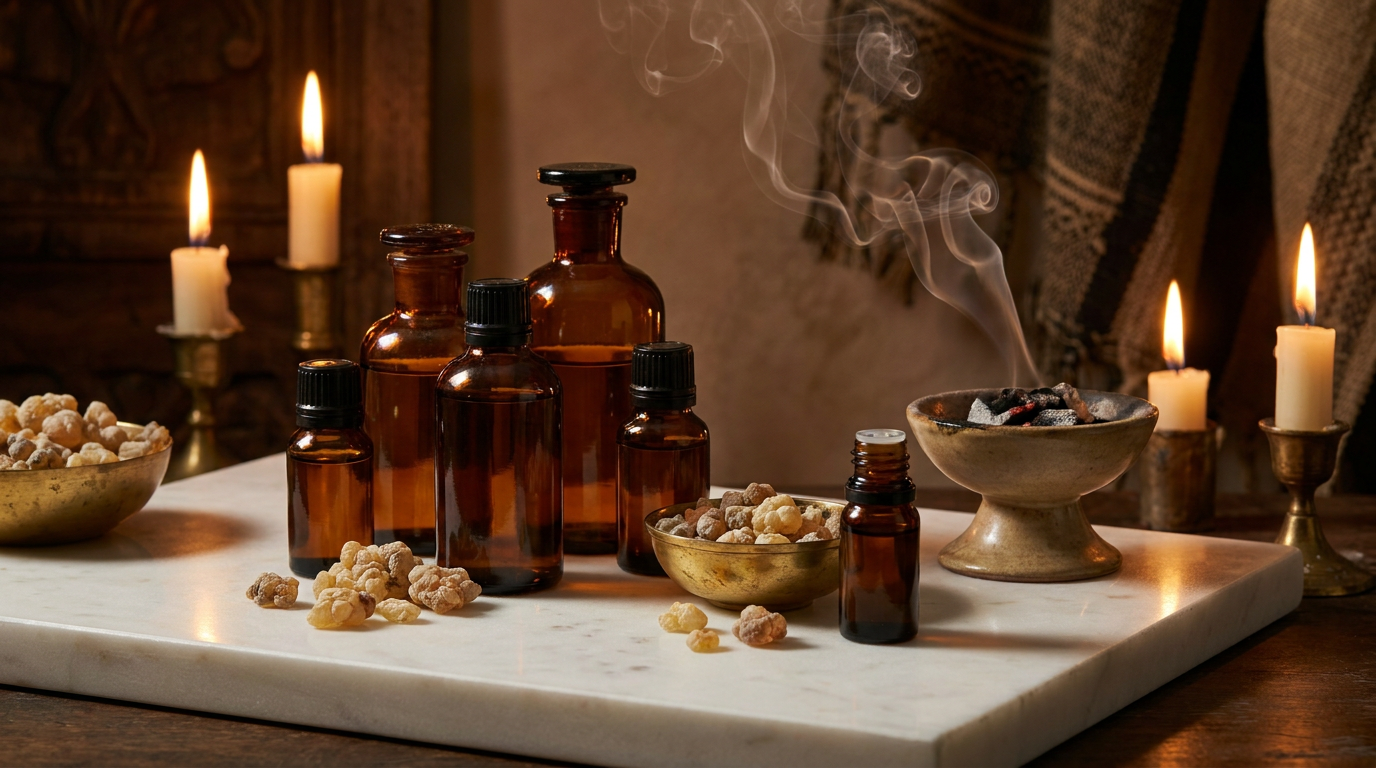
Frankincense Resin Sourcing Map: Where the Best Grades Come From
Long before frankincense reached altar tables and apothecary shelves across the ancient world, it began as sap weeping from a scarred tree trunk in some of the harshest terrain on earth. The resin's story is inseparable from its geography. A handful of arid corridors, stretching from the Horn of Africa across the Gulf of Aden to the Arabian Peninsula and into the dry hills of northern India, produce nearly all the world's frankincense. Understanding where frankincense comes from is the first step toward understanding what you're actually buying.
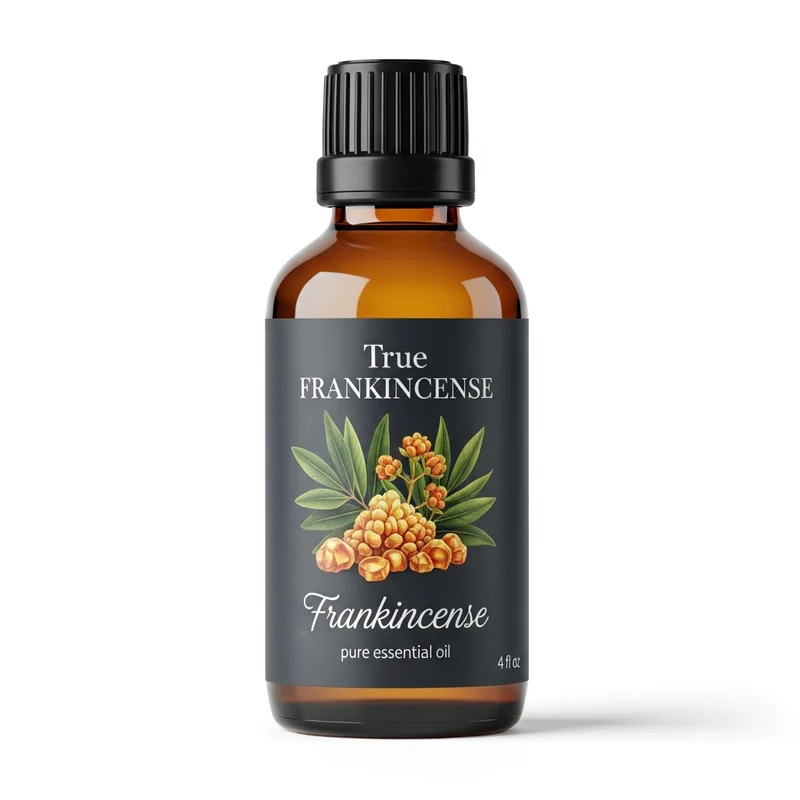
Frankincense Essential Oil
Six single-origin frankincense varieties, steam-distilled and GC/MS verified.
From $10.99
Shop Frankincense Oil →This guide walks through the major frankincense origin countries, what distinguishes resin from each region, and how sourcing shapes the grade that eventually reaches a bottle. Consider it a map, not a ranking. Each origin has its own character, and no single region holds a monopoly on quality.
The Boswellia Genus: A Quick Primer
Frankincense is the hardened resin of trees in the genus Boswellia. When the bark is deliberately scored, the tree releases a milky sap that oxidizes in the open air into amber-colored droplets called tears. Several Boswellia species exist, and each grows in a distinct range shaped by rainfall, elevation, and soil type. That range determines not just the species name on a label but the resin's aroma profile, resin content, and market tier.
The six varieties most commonly found in specialty trade are Boswellia serrata, Boswellia sacra, Boswellia carterii, Boswellia frereana, Boswellia neglecta, and Boswellia rivae. Each traces back to a specific pocket of the world, and frankincense sourcing has always followed the natural boundaries of where these trees choose to grow.
Somalia: The Cal Madow Range and the Maydi Coast
Somalia's Cal Madow mountains, a rugged limestone range in the country's north, are home to some of the most sought-after Boswellia carterii trees in the world. Growers there have tapped the same rocky slopes for generations, working trees that root directly into cliff faces where almost nothing else survives. Resin harvested from this region is often labeled Royal Hojari, a designation tied to both the tree's maturity and the purity of the tears it produces.
Further along Somalia's coastline, near the town of Maydi, grows Boswellia frereana, a separate species entirely from carterii despite the shared geography. Frereana resin is prized for a bright, almost citrus-forward aroma and is sometimes chewed like gum in local tradition, a practice distinct from its aromatic use elsewhere. Because frereana trees are slower to mature and grow in smaller, scattered stands, frereana resin tends to sit at the rare end of the market.
Somali sourcing is not without complications. Political instability in parts of the country, combined with informal export routes, means traceability varies widely by supplier. Buyers who care about origin transparency should look for companies that can name the specific harvesting cooperative or region, not just the country.
Oman: The Dhofar Mountains
Across the Gulf of Aden, the Dhofar region of southern Oman produces Boswellia sacra, the species most closely associated with the frankincense trade routes of antiquity. The monsoon-fed valleys around Dhofar create a microclimate unlike anywhere else on the Arabian Peninsula, and the resin grown there, often called Sacred Hojari, has a long-standing reputation for a smooth, balsamic aroma with minimal sharpness.
Omani sourcing tends to be more tightly regulated than sourcing from the Horn of Africa. Government oversight of harvesting seasons and export quotas has helped protect wild Boswellia sacra populations from the kind of overtapping that has damaged stands elsewhere. That regulation comes with a cost: Omani resin, particularly the Sacred Hojari grade, generally commands a premium price relative to other origins.
Ethiopia and Kenya: The Horn of Africa Drylands
The dry lowlands spanning Ethiopia, Kenya, and the disputed Ogaden region support two species that rarely make it into mainstream conversations about frankincense: Boswellia neglecta and Boswellia rivae. Neglecta grows across the scrublands of southern Ethiopia and northern Kenya, often alongside acacia and myrrh trees, in terrain harsh enough that local harvesters describe it as wild rather than cultivated. Its resin has an earthier, more resinous character than the brighter Somali and Omani grades.
Boswellia rivae grows in the Ogaden, a region straddling the Ethiopia-Somalia border. Political sensitivity around the area, along with the relatively small population of mature rivae trees, makes this one of the more limited origins in the trade. Sourcing from the Ogaden requires relationships built over years with local harvesting networks, since there is little in the way of formal export infrastructure.
Both regions illustrate a broader point about frankincense origin countries: political borders rarely line up with where Boswellia trees actually grow. A single tree stand can straddle a contested boundary, and sourcing partners often need to navigate that reality directly with harvesting communities rather than through centralized trade channels.
India: The Serrata Groves of Rajasthan
Boswellia serrata grows across the dry deciduous forests of central and western India, with Rajasthan and neighboring Gujarat among the most productive regions. Unlike the wild, cliffside harvesting typical of Somalia and Oman, Indian serrata production benefits from a more established agricultural infrastructure, with cooperatives and forest departments overseeing much of the tapping.
Serrata resin tends to have a lighter, more approachable aroma than sacra or carterii, and its wider availability generally makes it the most accessible entry point for people encountering frankincense sourcing for the first time. It has also become one of the more studied Boswellia species in scientific literature, though findings on serrata remain preliminary and should be read as research observations rather than claims about outcomes for any individual.
How Resin Is Graded
Grading standards vary by origin and by trader, but a few factors show up consistently across the frankincense trade:
- Tear size and color: Larger, paler tears are generally considered more desirable, though darker tears aren't necessarily lower quality, just different in resin composition.
- Purity: Higher grades contain fewer bark fragments, sand, or other harvesting debris mixed into the resin.
- Harvest timing: Resin from the first tapping of a season is often considered superior to later taps, which can pick up more impurities as the tree's wound ages.
- Tree maturity: Older, established trees tend to produce more consistent resin than younger trees still building up their tapping scars.
- Aroma on burning: Traditional traders in Oman and Somalia still assess quality by burning a small sample, judging the smoke's character as much as the raw resin's appearance.
None of these factors are standardized internationally the way, say, coffee grading is. A grade that means "top tier" from one Somali cooperative may not match the same label from an Ethiopian exporter. This is part of why working directly with origin-specific suppliers, rather than anonymous bulk resin brokers, matters so much for consistency.
Harvesting Season and Sustainability
Boswellia trees are typically tapped during the dry season, when sap flow is slower and the resin has time to harden into solid tears before it's collected, usually every two to three weeks over several months. Harvesters make shallow incisions in the bark, wide enough to release sap but not so deep that the tree is permanently damaged. A tree can be tapped productively for decades if the harvester paces the cuts and lets the bark recover between seasons.
Overtapping has become a real concern in parts of Somalia and Ethiopia, where economic pressure has pushed some harvesters toward more aggressive scoring that shortens a tree's productive life and, in the worst cases, kills it outright. Researchers studying wild Boswellia populations have flagged this as a long-term threat to supply in certain regions, separate from any political or logistical disruption. Buyers who prioritize sustainable frankincense sourcing generally look for suppliers who can speak specifically to harvesting rotation practices, not just organic or wild-harvested labeling, which carries no enforceable meaning in most exporting countries.
A Sourcing Comparison at a Glance
| Variety | Primary Origin | Typical Aroma Character | Market Tier |
|---|---|---|---|
| Boswellia serrata | Rajasthan, India | Light, approachable, mildly sweet | Everyday |
| Boswellia neglecta | Kenya / Ethiopia drylands | Earthy, resinous | Wild-harvested |
| Boswellia carterii | Cal Madow, Somalia | Warm, balanced, classic | Classic / Royal Hojari |
| Boswellia rivae | Ogaden, Ethiopia / Somalia | Deep, slightly smoky | Limited |
| Boswellia sacra | Dhofar, Oman | Smooth, balsamic | Premium / Sacred Hojari |
| Boswellia frereana | Maydi, Somalia | Bright, citrus-forward | Rare |
Tier labels reflect relative market availability and traditional trade reputation, not a hierarchy of merit. Someone drawn to a bright, citrus-leaning aroma may prefer frereana over the more classic profile of carterii, regardless of which one costs more.
Reading a Label for Origin Transparency
Because frankincense sourcing spans some of the least centralized supply chains in the botanical trade, label transparency is one of the few practical tools a buyer has. A few things worth checking before purchasing:
- Does the label name the Boswellia species, not just "frankincense oil" or "frankincense resin"?
- Is a country or region of origin listed, ideally beyond just the exporting nation?
- Does the seller describe how the resin was tapped, wild-harvested versus semi-cultivated?
- Is there any batch or harvest-season information available on request?
A supplier who can answer these questions specifically, rather than defaulting to vague language like "sustainably sourced" with no further detail, is generally a more reliable partner. Origin claims that can't be traced back to a region or cooperative are worth treating with some skepticism.
Why the Map Still Matters
Frankincense has moved across trade routes for thousands of years, from Dhofar's ports to the incense stalls of ancient Alexandria and beyond. The routes have changed. Container ships have replaced camel caravans, and online storefronts have replaced spice-road markets. But the underlying geography hasn't shifted at all. The same handful of arid regions still produce nearly all the world's frankincense, and that scarcity is exactly what makes origin worth paying attention to.
Anyone building a relationship with this resin, whether through daily ritual, aromatic practice, or simple curiosity about where it comes from, benefits from knowing the map behind the bottle. As always, consult a qualified healthcare provider before incorporating any new botanical into your routine, particularly if you are pregnant, nursing, or managing an existing health condition.