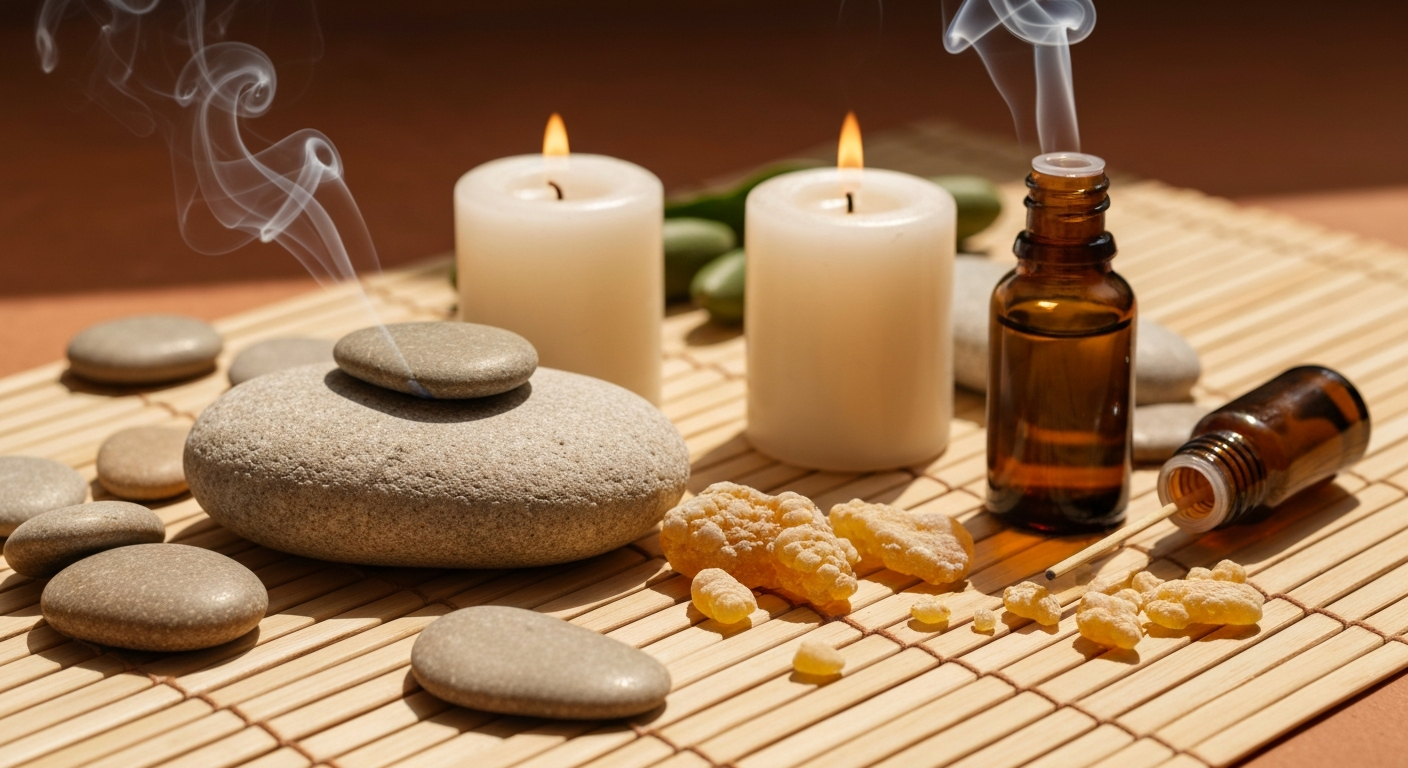
Frankincense for TMJ and Jaw Pain: Massage Techniques and Blends
Few discomforts are as quietly relentless as jaw tension. That dull, persistent ache radiating from the temporomandibular joint — the intricate hinge connecting your jaw to your skull — can color an entire day, interfering with eating, speaking, and even restful sleep. For those exploring complementary, alongside conventional care approaches, frankincense essential oil has emerged as one of the most intriguing options in the aromatic wellness world. Revered for millennia across the ancient trade routes of Oman, Somalia, and Ethiopia, this sacred resin is now drawing the attention of modern researchers and wellness practitioners alike.
In this guide, we'll walk you through what frankincense is, why it has become a focal point of interest for those dealing with frankincense TMJ pain management routines, how to blend it safely, and the gentle massage techniques that may help promote a sense of ease around the jaw and facial muscles. As always, this information is educational and does not replace the advice of a qualified healthcare provider. If you are experiencing jaw pain, please consult your dentist or physician before beginning any new wellness practice.
Understanding TMJ Discomfort: A Brief Overview
The temporomandibular joint (TMJ) is one of the most complex joints in the human body, functioning as both a hinge and a sliding mechanism. Temporomandibular disorders (TMD) is the umbrella term for a range of conditions affecting this joint and the surrounding muscles of mastication. People report a wide spectrum of experiences: jaw clicking, facial tightness, headaches radiating from the temples, earaches, and neck tension that can travel down through the shoulders.
Causes vary widely and may include teeth grinding (bruxism), stress-related muscle clenching, bite misalignment, injury, or arthritis within the joint itself. Because the TMJ sits at such a convergence point of muscular, skeletal, and nervous system activity, many people find that a multi-modal approach — combining professional dental or medical treatment with supportive self-care practices — offers the most meaningful comfort.
It is within this supportive self-care space that essential oil for TMJ routines have found a growing, curious audience.
Why Frankincense? The Science and the Story
Frankincense essential oil is steam-distilled from the hardened resin of Boswellia trees — most notably Boswellia sacra, Boswellia carterii, and Boswellia serrata. Its warm, woody, slightly citrus-tinged aroma has anchored religious ceremonies from ancient Egypt to the Roman Catholic Church, and its resin has featured in Ayurvedic and traditional Arabic medicine for thousands of years.
Modern research has turned its attention to the resin's primary bioactive compounds, particularly the boswellic acids found in the whole resin (though it is worth noting these large molecules are largely absent from the steam-distilled essential oil). The essential oil itself is rich in monoterpenes such as α-pinene, limonene, and sabinene, which some research suggests may interact with certain biological pathways when applied topically in a properly diluted carrier oil.
Some studies observe that aromatic compounds in frankincense oil may support a sense of calm and ease — a meaningful consideration given that jaw clenching and TMJ tension are so frequently tied to stress responses. People report that incorporating frankincense into a mindful massage routine helps them feel more present, relaxed, and aware of areas of held tension in the face and jaw.
"Frankincense does not belong to any single culture or century. It belongs to the long human story of seeking comfort and meaning through the gifts of the natural world."
Want to understand what makes different frankincense varieties unique before you blend? Our deep dive into the different species of Boswellia and how to choose the right one will help you source with confidence.
Essential Safety Information Before You Begin
Before we explore techniques and blends, please read and observe the following safety guidelines carefully. Essential oils are potent, concentrated plant extracts — respectful use is non-negotiable.
- Always dilute. Never apply undiluted (neat) frankincense essential oil directly to the skin. For facial and jaw massage, a 1% dilution is generally recommended — that equates to approximately 1 drop of essential oil per teaspoon (5 ml) of carrier oil. Sensitive individuals should start at 0.5%.
- Patch test first. Apply a small amount of your diluted blend to the inner forearm. Wait 24 hours. If redness, itching, or irritation occurs, do not proceed.
- Avoid mucous membranes and eyes. The jaw and temple area are close to the eyes. Apply carefully and wash hands thoroughly after use.
- Pregnancy and nursing. If you are pregnant, nursing, or trying to conceive, consult your healthcare provider before using essential oils.
- Children. Facial application of essential oils on children requires specialist guidance. Many oils are not appropriate for young children.
- Medications and conditions. If you are taking any medication or have a diagnosed health condition, consult your doctor before beginning an essential oil practice. Essential oils are not a substitute for medical treatment.
- Skin sensitivity. Those with sensitive, reactive, or compromised skin should use the lowest possible dilution and consult a dermatologist if uncertain.
Building Your Frankincense Jaw Tension Blend
A well-considered blend layers complementary aromatic profiles while thoughtfully addressing the multifaceted nature of jaw tension. Below are three blends ranging from simple to more elaborate, all formulated at a safe 1% dilution for facial use in a 10 ml roller bottle or dropper bottle.
Blend 1: The Classic Calm — Frankincense & Lavender
Simple, accessible, and beautifully balanced. Lavender (Lavandula angustifolia) is widely used in aromatic wellness for its gentle, calming aromatic profile.
- 10 ml sweet almond oil or jojoba oil (carrier)
- 2 drops Boswellia carterii frankincense essential oil
- 2 drops lavender essential oil
Aroma profile: Warm, soft, and quietly grounding. Ideal for an evening wind-down ritual.
Blend 2: Deep Woods Release — Frankincense, Copaiba & Marjoram
Copaiba essential oil (distilled from Copaifera resin) shares aromatic chemistry with frankincense and is increasingly explored by researchers. Sweet marjoram has a long tradition of use in aromatic massage targeting areas of muscular tension.
- 10 ml fractionated coconut oil (carrier)
- 2 drops Boswellia sacra frankincense essential oil
- 1 drop copaiba essential oil
- 1 drop sweet marjoram essential oil
Aroma profile: Woody, herbaceous, and deeply earthy. Suited for those who prefer a more resinous, forest-like scent experience.
Blend 3: The Tension Ritual — Frankincense, Roman Chamomile & Helichrysum
A more considered, luxury blend. Roman chamomile and helichrysum are both celebrated in high-end aromatherapy circles for their refined aromatic qualities and their traditional use in facial and wellness applications.
- 10 ml rosehip seed oil (carrier — adds skin-nourishing properties)
- 2 drops Boswellia serrata frankincense essential oil
- 1 drop Roman chamomile essential oil
- 1 drop helichrysum essential oil
Aroma profile: Honeyed, warm, and complex. A true aromatic ritual experience.
Curious about how frankincense pairs with other resinous oils? Explore our guide to blending frankincense and myrrh for wellness rituals for more layered aromatic combinations.
Massage Techniques for the Jaw and TMJ Area
Technique matters as much as the blend itself. The following massage sequence is designed to be gentle, intentional, and safe for most adults. Perform these movements slowly, breathing deeply throughout — the aromatic inhalation is part of the experience.
How often? Many people incorporate this as a nightly ritual, particularly for those who experience nighttime clenching. Start with 3–4 times per week to observe how your skin and jaw respond.
Step 1: Prepare and Warm
Apply 2–3 drops of your chosen diluted blend to clean fingertips. Rub your palms together gently to warm the oil, then cup your hands over your nose and mouth (avoiding eye contact) and take 3 slow, deep breaths. This aromatherapy inhalation step may help promote a sense of calm before you begin.
Step 2: Jaw Muscle Effleurage
Using the pads of your index and middle fingers, locate the masseter muscle — the bulge of muscle you feel when you clench your teeth. Place fingers here and apply gentle, circular strokes moving downward and outward toward the jawline. Use light-to-moderate pressure only. Continue for 60–90 seconds on each side. Never press so hard that you feel pain.
Step 3: TMJ Joint Circles
Place one fingertip just in front of the small triangular flap of your ear (the tragus). You should be able to feel the joint move when you open and close your mouth. With your mouth slightly open and jaw relaxed, apply very gentle circular pressure here — no more than the weight of a coin. Perform 10 slow circles in each direction, then switch sides.
Step 4: Temple and Temporal Muscle Release
The temporalis muscle fans upward from the jaw across the temple. Using all four fingertips, apply gentle circular strokes across the temple area, working from the hairline down toward the cheekbone. This area often holds significant tension in people who grind their teeth. Spend 60 seconds on each side.
Step 5: Neck and Suboccipital Release
TMJ tension frequently radiates into the neck. Using gentle upward strokes with both hands, glide from the base of the skull down the sides of the neck toward the collarbone. Avoid pressing on the front of the throat or directly on the carotid arteries. This final step encourages a sense of full upper-body release.
Step 6: Close the Ritual
Place warm, cupped palms over your jaw for 30 seconds. Breathe slowly. Allow yourself a moment of stillness. Many people find this closing gesture — borrowed from facial gua sha and traditional massage practices — provides a meaningful sense of completion.
Complementary Practices Worth Considering
An aromatic massage ritual works best as one element within a broader, thoughtful self-care approach. Some practices that may complement your frankincense jaw pain routine include:
- Warm compresses applied to the jaw before massage to soften tissue
- Mindful breathing or meditation to reduce stress-related clenching
- Jaw stretching exercises as recommended by a physical therapist or dentist
- Nightguard or splint therapy prescribed by your dental professional
- Dietary modifications avoiding very hard or chewy foods during periods of heightened discomfort
For a broader understanding of how frankincense fits into a holistic daily wellness routine, our article on incorporating frankincense into your daily wellness practice offers a thoughtful starting framework.
Choosing Quality Frankincense Oil: What to Look For
Not all frankincense essential oils are equal. Given the sacred rarity of high-grade Boswellia resin — and the very real issues of adulteration and unsustainable harvesting within the global supply chain — sourcing with intention matters profoundly.
| Quality Indicator | What to Look For |
|---|---|
| Botanical name on label | Full Latin name (Boswellia sacra, B. carterii, etc.) — not just "frankincense" |
| Country of origin | Oman, Somalia, Ethiopia, India depending on species |
| Extraction method | Steam distillation for essential oil; CO2 extraction retains more resin compounds |
| Third-party testing | GC/MS (gas chromatography/mass spectrometry) reports available |
| Ethical sourcing | Sustainably harvested; fair trade certification where possible |
| Packaging | Dark amber or cobalt glass bottle; UV-protective |
Learn more about what sets responsibly sourced resin apart in our guide to sustainable frankincense harvesting and why it matters.
A Note on Realistic Expectations
We believe deeply in the value of aromatic ritual and the power of plant-based traditions — but we believe equally in honesty. Frankincense essential oil is not a medical treatment for TMJ disorders. It will not realign your bite, repair cartilage, or replace the care of a qualified dentist, oral surgeon, or physical therapist.
What anecdotal evidence and personal accounts suggest is that a mindful, aromatic self-massage ritual may help promote a sense of muscular ease and calm — and that for many people, this sense of ease, practiced consistently, becomes a meaningful part of their overall approach to living with jaw tension.
If your jaw pain is severe, worsening, accompanied by locking, or significantly affecting your quality of life, please seek professional medical evaluation promptly. Essential oils are a complement to care, never a replacement for it.
Final Thoughts
There is something profoundly human about reaching for a scented oil to ease discomfort — a gesture that connects us to healers and ritualists across thousands of years of history. When you take five quiet minutes each evening to massage a frankincense blend into your jaw and temples, you are participating in something ancient and something deeply personal at the same time.
Whether you are drawn to the resinous warmth of Boswellia sacra from the misty Dhofar mountains of Oman, or the slightly greener, more citrus-forward notes of Boswellia carterii from the Horn of Africa, exploring frankincense for jaw pain as part of a considered self-care ritual is a practice worthy of your time and attention — approached, as always, with respect for both the plant and your body.
Always consult a qualified healthcare provider before beginning any new wellness practice, particularly if you have a diagnosed medical condition, are taking medication, or are pregnant or nursing.